Blink Charging Mobile App
- 3.8
- Rating
- 100.00K
- Installs
- Free
- Price

 Analysis by App-foxy
When an electric vehicle is shared between people, finding a charger is not just a driving task. It becomes a small coordination problem: someone needs to know where to stop, another person may need to check the vehicle later, and everyone benefits when the charging plan is clear. I found Blink Charging Mobile useful in that exact situation because it puts charger discovery in a dedicated Auto & Vehicles app rather than making the driver search through unrelated map results.
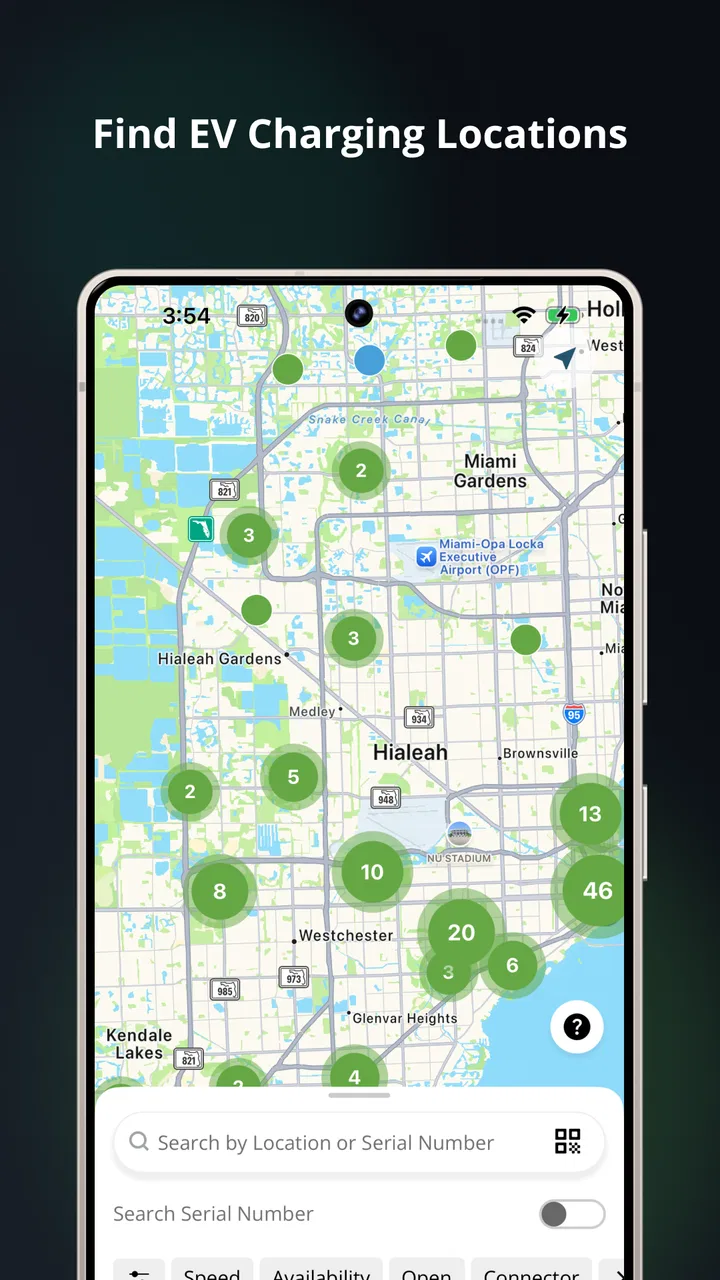
Blink Charging Mobile is a free app from Blink Charging for finding EV charging locations. It is aimed at everyday drivers who want a more direct way to look for charging points, whether they are commuting alone or sharing a car with a partner, relative, or colleague. The app is rated for Everyone, so its subject matter is suitable for a broad audience, although the person operating the vehicle and making charging decisions should still be an appropriately responsible driver.
How it fits into a shared EV routine
My most useful way to think about this app is as a planning tool for the next charging stop, not as a complete replacement for every navigation or vehicle app. If one household member takes the EV to work and another needs it later, the first driver can use the app to identify a practical charging location before leaving. That reduces the need for a rushed conversation when the battery is already low.
You May Also Like

 Google Keep - Notes and lists
Google Keep’s Quiet Growth Shows the Appeal of Simpler Notes
As mobile work gets busier, Google Keep keeps winning a simple contest: capture a thought quickly, find it later, and get on with the day.

 Blood Strike: 2.5 Anniversary
Blood Strike’s Loadouts Turn Every Drop Into a Tactical Gamble
A close look at Blood Strike’s custom loadouts: how fast access to signature weapons reshapes its battle royale rhythm, rewards preparation, and narrows the gap between fights.

 Pandora - Music & Podcasts
Pandora’s Music Is Easy to Start, but Harder to Recover
Pandora’s strength is its low-effort path from a seed to a station. Its weak spot is how much confidence it asks you to place in connection, setup, and quiet recovery.

 8 Ball Pool
 Is Built on Rivalries, Rematches, and Routine
A close look at the rivalries, rematches, shared routines, and unanswered safety questions that turn a quick pool match into a persistent mobile community.

 Samsung Music
’s Quiet Strength Is Playing What You Already Own
Its reach comes less from spectacle than from dependable access to a personal library. That simplicity is both the app’s strongest retention engine and its ceiling.

 AccuWeather: Weather Radar
AccuWeather Review: A Quick, Clear Forecast for Everyday Decisions
For everyday plans, the best forecast is the one you can understand quickly. AccuWeather makes rain timing, radar, and local conditions easy to act on, with a few trade-offs.
More From Our News Desk



A realistic example is a shared car used for a morning commute and an afternoon appointment. The morning driver can search for a charger near the workplace or along the return route, then tell the next driver which area to consider. The second driver still needs to make the final decision based on traffic, battery level, and the vehicle’s own information, but the conversation starts with a specific charging option instead of a vague instruction to “find somewhere.”
This is where the app feels more useful than a general-purpose map search. Ordinary map apps can show charging locations, but their results may sit alongside fuel stations, repair shops, parking areas, and other places. Blink Charging Mobile keeps the task focused. That narrower purpose makes it quicker to open when the only question is where an EV can charge.
There is also a helpful distinction between household coordination and account sharing. I would not treat the app as a family dashboard or assume that one person’s phone automatically becomes a live view of another person’s trip. A better routine is to use it for shared planning: one driver searches, communicates the intended stop, and the next driver verifies the plan before setting off. That keeps expectations realistic and avoids relying on a feature the app is not presented as providing.
For a workplace pool car or a vehicle shared by several drivers, the same approach works. The person taking the car can identify a likely charging area and pass the information to the next user. The app is most valuable when it prevents repeated searching by each driver, but it does not remove the need for a simple handoff message about the vehicle’s charge level, destination, and intended stop.
Starting without overcomplicating the setup
The app is available at no cost, which makes it easy to try before deciding whether it deserves a permanent place on every household phone. I would begin by installing it on the devices used by the regular drivers, then agree on a simple rule: use the app to locate a candidate charger, but confirm the route and the car’s remaining range separately.
That boundary matters because charger discovery and trip planning are related but different jobs. A location that looks convenient on a map may not suit the driver’s direction, stopping time, or battery situation. I found it more sensible to search before the trip or during a proper break, rather than asking the driver to handle the phone while moving. The app can simplify the search, but safe driving habits still come first.
The developer is Blink Charging, and the app belongs clearly in the charging-location category rather than in vehicle maintenance, insurance, or full trip management. That focus is a strength for people who want a straightforward starting point. It can also be a limitation for drivers expecting one application to monitor the vehicle, organize household access, and manage every part of a journey.
On Android, the current release is version 3.1.34 and requires Android 10 or later. That is worth checking before planning to install it on an older spare phone kept in the car. A shared-device arrangement often involves an older handset, so compatibility should be considered early rather than discovered when someone needs to charge immediately.
I would also avoid building a household process around one permanently logged-in phone unless everyone understands who is responsible for the device. A shared handset can be convenient in a car, but it can also be misplaced, left uncharged, or unavailable when another driver needs it. Installing the app on the phones of the people who actually drive the EV is usually a more dependable arrangement than treating one device as communal infrastructure.
Coordinating a charging stop between drivers
The most practical workflow is short. Before departure, the driver opens the app, searches for a suitable charging location, and checks whether that location makes sense for the route. They then share the place name or general location through the household’s normal communication method. The next driver can repeat the search independently, which is useful because conditions and plans may have changed.
This two-person check is not wasted effort. It prevents a common mistake in shared-car use: one person assumes the other has handled the whole charging plan. I prefer to treat the app as the source for finding a possible charger, while the handoff message covers the rest. A useful message might include the vehicle’s approximate charge, the planned destination, and whether the stop is intended before or after the trip.
Another non-obvious benefit is reducing decision fatigue. When several people use the same EV, the argument is often not about whether charging is needed but about who should research it. Giving one person responsibility for locating the next option, then asking the other to confirm it, makes the task more predictable. The app supports that division because its purpose is narrow and easy to explain.
There is a trade-off, however. If a household expects live coordination, automatic trip sharing, or a central record of previous stops, this app alone may feel limited. In that case, a vehicle manufacturer’s app, a general navigation service, or a separate charging-network tool may be a better companion. I would still keep Blink Charging Mobile available if charger discovery is the repeated pain point, but I would not pretend that a focused locator replaces a broader ecosystem.
For occasional drivers, the best practice is to demonstrate the search process before handing over the keys. A person who rarely drives the EV may not know how much range the vehicle has, how long charging normally takes, or which details matter when selecting a stop. Showing them how to use the app is more useful than simply telling them that it is installed.
Account boundaries, age, and trust
Because the app is rated Everyone, it is not presented as an adults-only product. Even so, the age rating should not be confused with permission to drive, create charging plans independently, or handle a vehicle without supervision. In a household with teenagers, I would treat the app as an information tool and keep the driving and payment responsibilities with the adults who manage the car.
That distinction is especially important on a shared phone. A younger household member might be able to look up a charging location, while an adult remains responsible for deciding whether the stop is safe and appropriate. The app can support that conversation, but it should not be used as a substitute for teaching basic EV habits such as checking remaining range, planning a sensible stop, and avoiding phone interaction while driving.
I also recommend keeping account boundaries clear. Each person should know whether they are merely searching for locations or whether they are expected to perform additional actions connected with charging. Do not assume that access to the app means access to another person’s account, vehicle information, or charging history. A household routine works better when everyone knows which phone is being used, who is responsible for the vehicle, and who confirms the final stop.
This matters for trust as much as convenience. If one driver says a charger was selected but another cannot find the same place, the problem may be a changed route, a different search context, or a misunderstanding during the handoff. Asking the second driver to verify the location avoids turning the app into a source of unnecessary blame. The goal is shared visibility, not surveillance.
For an older relative or a guest driver, I would keep the instructions simple: open the app before leaving, search for the charging location, and ask for help if the route is unclear. The focused design is easier to explain than a crowded vehicle-management application, but the driver still needs a backup plan if the intended stop does not fit the journey.
Where it beats ordinary alternatives—and where it does not
Compared with searching the web, the app offers a more purposeful starting point. You are opening it with an EV charging question already in mind, so the experience feels less cluttered. Compared with a general map application, its advantage is specialization. I would choose it when the immediate task is finding charging infrastructure rather than comparing restaurants, traffic, parking, and every other nearby business at once.
General navigation tools can still be better when the route itself is the priority. If I am already navigating and need traffic-aware directions, I may prefer to keep that task in the navigation app and use Blink Charging Mobile only to research charging options beforehand. Likewise, drivers who rely heavily on a carmaker’s route planning may find that the built-in system gives them a more integrated experience.
The app is also not the right sole solution for someone who wants a complete charging record, household scheduling system, or vehicle-status center. Its value comes from being focused. That focus makes it approachable, but it means the user may need another tool for the parts of EV ownership that happen before or after locating a charger.
One useful trade-off is convenience versus verification. A dedicated app can get me to a likely answer quickly, but I still want to check the choice against the vehicle’s range and the actual trip. Relying on any single map result without thinking about the route is a weak workflow. The best use of this app is as one step in a careful decision, not as permission to stop planning.
Performance expectations and everyday practicality
The app has an average rating of 3.8 from around 5.8 thousand ratings, with roughly 1.7 thousand written reviews. That suggests a service many people find useful but not universally smooth. I read that as a reason to test it during ordinary trips rather than waiting until a low-battery situation makes every inconvenience feel urgent.
It has passed the 100 thousand install mark, so it is not an obscure experiment with no established audience. Still, popularity does not guarantee that every location or search result will fit a particular driver’s needs. I would use the app regularly enough to understand how it behaves in the areas where the household normally travels.
For a shared device, practical preparation matters more than installing several similar tools. Keep the phone charged, make sure the regular drivers know where the app is, and agree that searches happen while parked or before departure. If the car is used by multiple people, a short written handoff can be more reliable than assuming everyone saw the same search.
Another useful habit is to plan the return journey, not only the outward trip. A morning driver may find a convenient charger near work, but the afternoon driver may be heading in a different direction. Searching with the next driver’s route in mind prevents the first person’s destination from becoming the household’s default answer to every charging question.
I would also avoid treating a nearby location as automatically convenient. The closest result may require a detour, may not suit the time available, or may be awkward for the person driving. The app helps narrow the search, but judgment remains important. This is one of the reasons I see it as a practical assistant rather than an autonomous charging manager.
Who should use it and who should skip it
I think the app is a good fit for EV owners who want a dedicated way to search for charging locations, especially people sharing one vehicle across a household. It is also useful for drivers who find general map apps too busy when they need a charger quickly. The free price lowers the barrier to trying it, and the Everyone rating makes it suitable as a household reference tool when adults supervise the actual driving decisions.
It is less suitable as a single all-purpose app for drivers who expect deep vehicle integration, automatic family coordination, or a complete journey-management system. If your main need is live navigation with traffic guidance, a navigation service may be the better first choice. If your main need is vehicle status and manufacturer-specific controls, the carmaker’s application may deserve priority.
I would also hesitate to recommend relying on it alone for a long or unfamiliar journey until the regular driver has tested the workflow. A shared household can reduce risk by making one person responsible for searching and another responsible for confirming. That small division of responsibility is more valuable than simply having the app installed on several phones.
My household verdict
After using it as a focused EV-location tool, I see Blink Charging Mobile as a sensible addition to a shared-car routine. Its strongest quality is clarity: when the question is “where can we look for a charger?”, the app gives that question its own space. That makes it easier to coordinate between drivers and less distracting than searching through an entire map full of unrelated results.
The app works best when the household sets sensible boundaries. Use it before driving or while parked, keep each person’s responsibilities clear, and confirm the route instead of assuming that a search result solves the whole trip. For younger users or occasional drivers, treat it as a reference tool rather than a replacement for adult judgment and safe driving practice.
My recommendation is therefore positive but specific. I would install it on the phones of the people who regularly share the EV, use it to identify candidate charging stops, and pair it with a simple handoff message. I would not make it the only navigation, account, or vehicle-management solution. As a free, focused app from Blink Charging, it earns a place in a household’s charging toolkit when the goal is easier discovery and better coordination—not when the expectation is an all-in-one family control center.
FAQs for Blink Charging Mobile App
01What features does the Blink Charging Mobile App offer?
The Blink Charging Mobile App provides users with the ability to locate nearby Blink charging stations, start and stop charging sessions, and track the progress of their vehicle's charge in real-time. Additionally, the app offers payment processing, allowing for easy and secure transactions directly through the app.
02Is the Blink Charging Mobile App compatible with both Android and iOS devices?
Yes, the Blink Charging Mobile App is fully compatible with both Android and iOS devices. Users can download the app from the Google Play Store for Android devices or the Apple App Store for iOS devices. The app is regularly updated to ensure compatibility with the latest operating systems.
03How do I create an account on the Blink Charging Mobile App?
Creating an account on the Blink Charging Mobile App is simple. Users need to download the app, open it, and follow the on-screen instructions to sign up. You’ll be required to provide some basic information such as your email address and a secure password. Once registered, you can start using the app immediately.
04Are there any fees associated with using the Blink Charging Mobile App?
While downloading the Blink Charging Mobile App is free, users may incur fees when using Blink charging stations. The cost per charge can vary based on location and station type. The app provides up-to-date pricing information for each station before you initiate a charging session, ensuring transparency.
05How can I find a Blink charging station using the app?
Finding a Blink charging station with the app is straightforward. Open the app and use the map feature to see all nearby stations. You can filter results based on availability and type of charger. The app also provides directions and estimated time of arrival to the selected charging station.
Pros
- User-friendly interface for easy navigation.
- Real-time charger availability updates.
- Multiple payment options supported.
- Detailed charging session history available.
- Customizable notifications for charging updates.
Cons
- Limited charger network in some areas.
- Occasional app crashes reported by users.
- Requires account setup before first use.
- No offline mode for charger location search.
- In-app ads can be intrusive at times.

Blink Charging Mobile App
Gallery